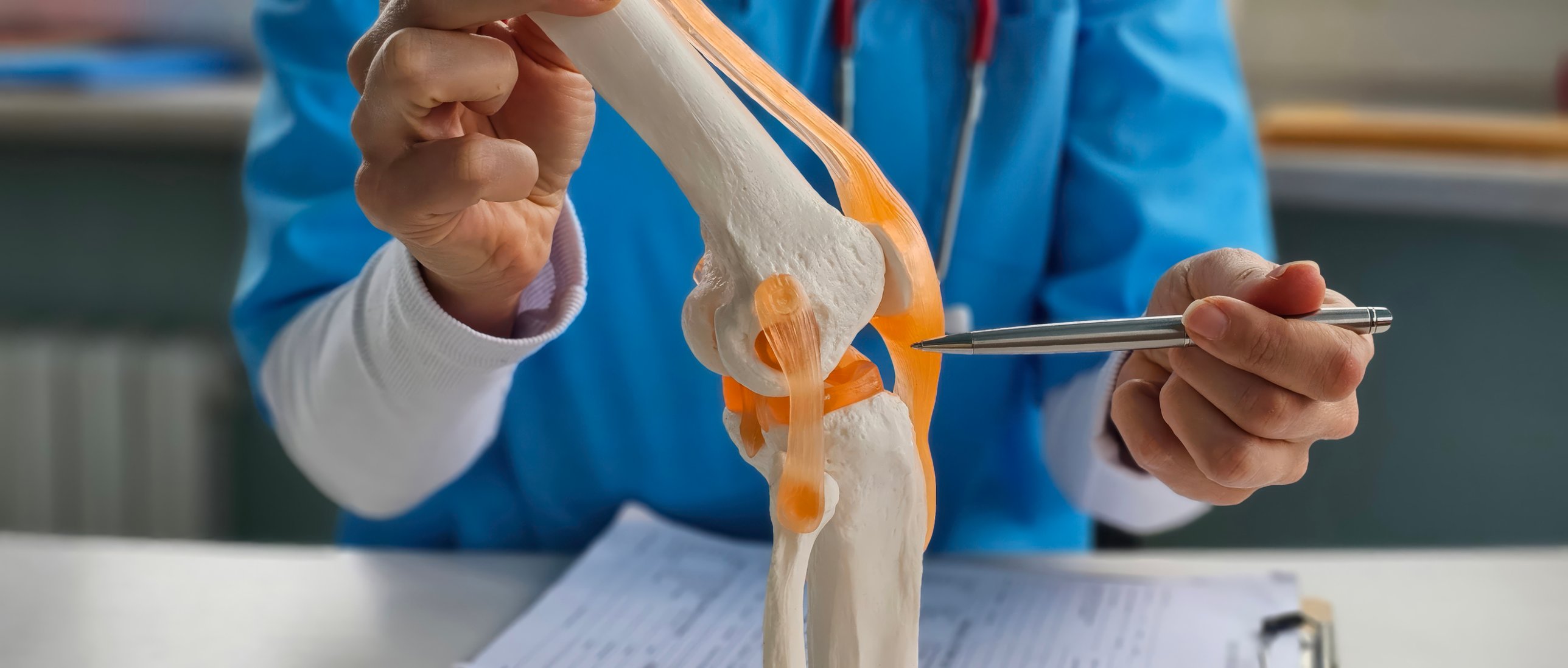

Spare the Scalpel® puts nonsurgical care first when it is reasonable. Orthobiologics such as PRP help some patients, especially with knee arthritis and tennis elbow, but a careful exam decides who needs surgery.
Many patients come to Dr. Cole expecting a surgery date, but often the visit starts with discussing other options including gaining a firm understanding of the patient’s goals should the pursue treatment.
With Dr. Cole’s well-established research on cartilage and biologic care, he believes that surgery should be the last step not the first. For many people, therapy, injections and nonoperative treatments can ease pain without an operation, the primary idea behind Spare the Scalpel which he developed, popularized and trademarked.
What Does Spare the Scalpel® Mean?
Spare the Scalpel® is a way of making choices about care, not a single procedure. Dr. Cole uses it as first-line care for most of his patients. If a nonsurgical option can ease pain and protect the joint, it gets a fair trial first.
The toolkit includes physical therapy, bracing, cortisone and hyaluronic acid injections, and orthobiologics such as platelet-rich plasma (PRP) with a goal of matching the treatment to the primary problem. Most importantly, Dr. Cole discusses how “skillful neglect” and education about their condition can provide the awareness and reassurance that patients need. In his TedX Talk, Dr. Cole explains how being an orthopedic surgeon starts with being a physician, and why his approach to care begins with nonsurgical treatment.
What Are Orthobiologics?
Orthobiologics are natural substances, such as cells, blood components and growth factors (proteins that signal tissue to heal). They can be given as an office injection or during surgery. Dr. Cole’s practice compares them to a “biologic pharmacy” that delivers healing and symptom reducing signals right where they are needed.
Examples include PRP, made from platelets in your own blood, and bone marrow aspirate concentrate (BMAC). Because the material is your own, there is no risk of rejection, and complications are rare. For a closer look at two common orthobiologics, see Orthobiologics Explained: PRP vs. BMAC.
Which Conditions May Respond Before Surgery?
Orthobiologics are most often tried for wear-and-tear problems. Knee arthritis is the leading example, and it is where much of the research has focused. Tendon problems around the knee, elbow and shoulder are another target, since tendons healing is challenging and symptoms are often due to a multitude of factors.
Results depend on the joint, how long the problem has lasted and how each person responds. Early arthritis in a stable knee is very different from a large tear. That is why a careful exam and imaging come first.
What Does the Research Show?
Dr. Cole’s orthobiologics research at Rush looks at how well orthobiologics work for arthritis. In his randomized trial of knee arthritis, PRP and hyaluronic acid gave similar results on the main pain score. On other measures, patients who got PRP reported less pain and better knee function at six months and one year.
A review by Dr. Cole’s team, which pooled studies of more than 1,000 patients, found that white-cell-poor PRP improved knee function more than hyaluronic acid or placebo injections.
How Is a Nonsurgical Plan Built?
Orthobiologics work best as part of a plan. Dr. Cole often pairs injections with physical therapy to improve motion and build the muscles around the joints. An unloader brace can help when knee arthritis mostly affects one side of the knee.
Most patients notice improvement about one to two months after PRP treatment ends, with some doing best with a series of injections. Follow-up visits help decide whether to continue, adjust or consider surgery.
When Is Surgery the Right Call?
Sparing the scalpel does not mean avoiding surgery at all costs. An unstable joint, a locked knee, a large torn tendon or ligament injury in the shoulder or elbow or advanced arthritis often needs an operation. Waiting too long can allow more damage and orthobiologics may still help when added during the repair.
The value is in the order of steps: a careful exam, a fair trial of conservative care and an honest talk about the evidence. To talk through your options for a painful knee, shoulder or elbow, you can request an appointment online.
Frequently Asked Questions
Are PRP injections stem cell treatments?
No. PRP is made from platelets in your own blood, not stem cells.
How long does it take for PRP to work?
Most patients notice a change about one to two months after treatment ends, but the results can be highly variable.
Does insurance cover orthobiologic injections?
Usually not. Insurers typically classify them as investigational.
Can orthobiologics help if I have arthritis, or a cartilage injury or injury to a tendon in my shoulder or elbow?
Sometimes, depending on the type and stage of damage. Learn how the two differ in Cartilage Damage vs. Arthritis.
Medical Disclaimer: This information is for educational purposes only and does not constitute medical advice. For diagnosis and treatment recommendations, please consult with Dr. Cole or another qualified orthopedic specialist at Midwest Orthopaedics at Rush.
Resources
Ackermann J et al. 2026. Editorial Commentary: Platelet-Rich Plasma Outlasts Hyaluronic Acid for Knee Osteoarthritis, but the Product, Not the Acronym, Is the Prescription. Arthroscopy. https://doi.org/10.1002/arj.70588
Cole BJ et al. 2017. Hyaluronic acid versus platelet-rich plasma: a prospective, double-blind randomized controlled trial comparing clinical outcomes and effects on intra-articular biology for the treatment of knee osteoarthritis. American Journal of Sports Medicine. https://doi.org/10.1177/0363546516665809
Chu CR et al. 2019. Optimizing clinical use of biologics in orthopaedic surgery: consensus recommendations from the 2018 AAOS/NIH U-13 Conference. Journal of the American Academy of Orthopaedic Surgeons. https://doi.org/10.5435/JAAOS-D-18-00305
Le ADK et al. 2018. Current clinical recommendations for use of platelet-rich plasma. Current Reviews in Musculoskeletal Medicine. https://doi.org/10.1007/s12178-018-9527-7
Riboh JC et al. 2016. Effect of leukocyte concentration on the efficacy of platelet-rich plasma in the treatment of knee osteoarthritis. American Journal of Sports Medicine. https://doi.org/10.1177/0363546515580787