
In this article
- What Heat Actually Does Inside the Joint
- Cartilage Hydration and the Dehydration Connection
- Muscle Fatigue Shifts Load to the Joint
- What Heat Acclimatization Actually Accomplishes
- Recovery Considerations for Joint Health
- When Late-Summer Joint Pain Deserves More Than Rest
- Frequently Asked Questions
- Resources
Late-summer training is a cumulative stress test for every structure in the body, and the joints are part of that equation. Heat raises intra-articular temperature, reduces cartilage’s hydration-dependent resilience, and accelerates the fatigue that shifts load from muscle onto joint surfaces.
August is when outdoor athletes are deepest into their training seasons and the heat is at its most relentless. Most of the conversation around summer training load focuses on cardiovascular strain and dehydration, but the joints absorb a share of that thermal stress too, in ways that are less visible and less often discussed. Here is how elevated core temperature affects the tissue inside a joint, and how recovery during late-summer training should account for it.
What Heat Actually Does Inside the Joint
The synovial fluid that lubricates and protects joint surfaces is not a static substance. Its viscosity and lubricating properties change in response to temperature, shear rate, and hydration status. A modeling study of knee cartilage under cyclic loading found that local cartilage temperature rises measurably during repetitive mechanical loading, driven by the viscous dissipation of energy within the tissue itself, and that synovial fluid flow does not significantly counteract this rise because of cartilage’s low permeability. In practical terms, the joint environment during prolonged late-summer training in heat is operating at elevated internal temperatures, which alters the mechanical behavior of both the fluid and the cartilage it is meant to protect.
Cartilage Hydration and the Dehydration Connection
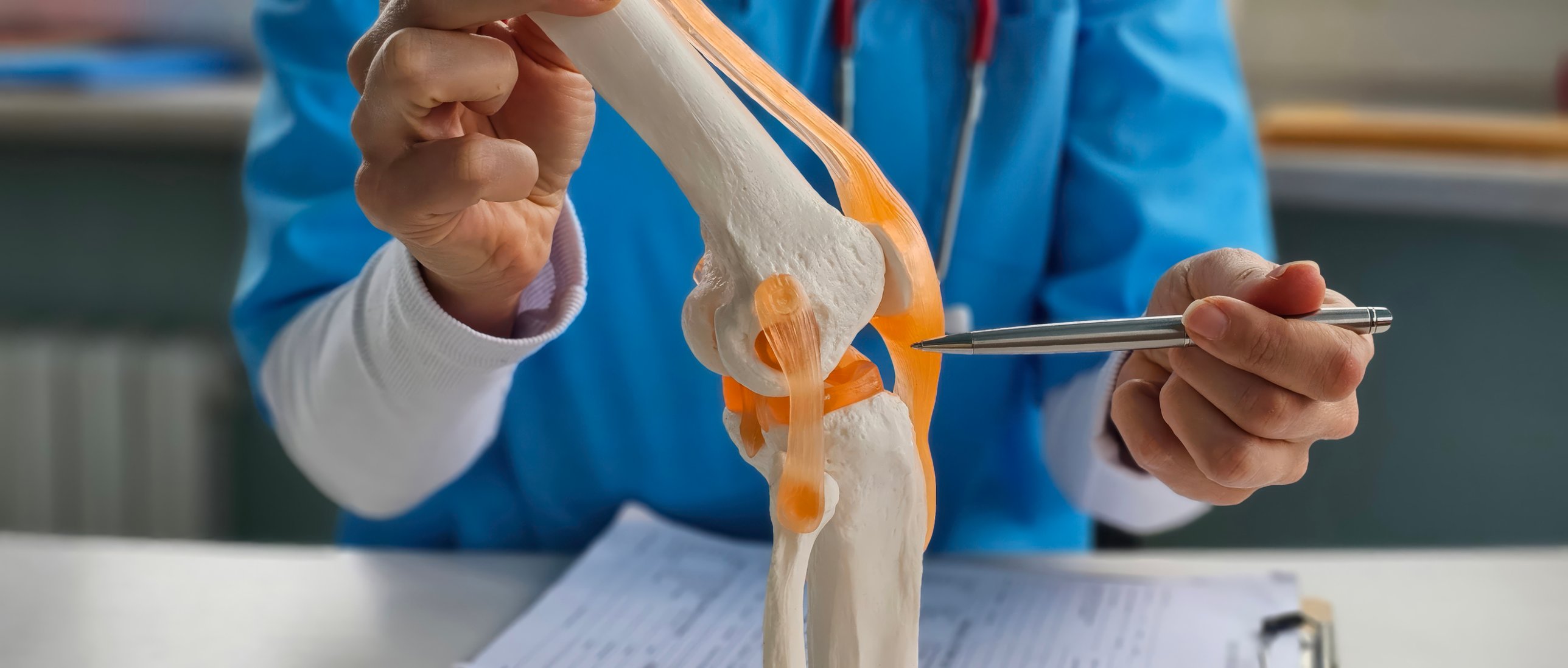
Articular cartilage is largely water by composition, and that water content is directly tied to its ability to distribute load and resist compressive forces. Systemic dehydration from heat exposure and sweat loss affects the osmotic environment that maintains cartilage hydration, reducing its mechanical resilience at exactly the point in a training session when cumulative joint loading is highest. The same training session that feels manageable on a mild spring morning places meaningfully different demands on cartilage when core temperature is elevated and fluid losses are significant. For athletes with existing cartilage damage or early articular defects, this physiological reality makes attention to hydration before and during training more consequential than it might appear.
Muscle Fatigue Shifts Load to the Joint
Heat accelerates neuromuscular fatigue, and that fatigue has a direct mechanical consequence for joints. The muscles surrounding the knee, hip, and shoulder function as dynamic shock absorbers, distributing and attenuating force before it reaches the joint surface. As those muscles fatigue in the heat, more of the impact and compressive load from each stride, jump, or overhead motion is transmitted directly through the joint rather than absorbed by the surrounding musculature. For athletes managing early cartilage changes or recovering from prior joint injury, the fatigue-driven increase in joint loading during late-summer sessions is a real risk factor for aggravating existing tissue.
What Heat Acclimatization Actually Accomplishes
The body does adapt to repeated heat exposure over time, and those adaptations have direct relevance for joint performance. Properly structured heat acclimatization reduces resting core temperature, improves plasma volume expansion that supports better tissue perfusion, and lowers heart rate at equivalent workloads. These systemic changes reduce the rate at which fatigue accumulates, which in turn slows the shift of mechanical load onto joint surfaces during prolonged activity. The practical implication is that athletes who build heat exposure progressively over one to three weeks before peak-demand late-summer training protect their joints partly through cardiovascular and thermoregulatory adaptation, not through joint-specific interventions alone.
Recovery Considerations for Joint Health
Late-summer training recovery should account for the thermal component of joint stress, not just the mechanical one. Active cooling after sessions reduces intra-articular temperature more quickly than passive rest, supporting a faster return to normal joint fluid behavior. Hydration that addresses electrolyte losses, not just water, supports the osmotic environment cartilage depends on for resilience. For athletes with known cartilage pathology or a history of significant joint injury, the cumulative stress of high-volume summer training in heat is also the context in which orthobiologic options are most worth discussing with a sports medicine physician, since interventions that support the joint’s internal environment can be timed strategically relative to training load rather than reserved only for acute flare-ups.
When Late-Summer Joint Pain Deserves More Than Rest
Aching joints after a long, hot training block often resolve with adequate recovery time. When pain persists beyond what normal recovery should produce, or a joint begins behaving differently, with new swelling, mechanical symptoms, or a pattern of pain that was not present before the summer, that shift is worth evaluating rather than waiting through another training week to see if it resolves on its own. Dr. Cole’s published research on cartilage and orthobiologics reflects the depth of available options for athletes whose joint issues extend beyond what rest and standard recovery can address. If a joint problem from summer training has not resolved with rest, requesting an appointment online for an evaluation is a clearer next step than training through it.
Frequently Asked Questions
Does heat affect joint health during training?
Yes. Elevated core temperature during exercise increases intra-articular temperature, alters synovial fluid behavior, and accelerates muscle fatigue, which shifts more mechanical load onto joint surfaces than would occur in cooler conditions.
Can dehydration damage cartilage?
Cartilage is largely water by composition and depends on adequate systemic hydration to maintain its mechanical resilience, so significant fluid losses from heat and sweat can reduce the joint’s ability to handle compressive load effectively.
What is heat acclimatization, and does it help joints?
Heat acclimatization is the body’s adaptive response to repeated heat exposure over one to three weeks, which reduces core temperature rise, improves plasma volume, and slows neuromuscular fatigue, indirectly protecting joints by reducing fatigue-driven mechanical load transfer.
Why do joints feel worse after training in the heat?
Elevated intra-articular temperature, reduced synovial fluid efficiency, dehydration effects on cartilage, and accelerated muscle fatigue from heat all converge to place greater stress on joints during hot-weather training sessions.
When should an athlete see a doctor about joint pain after summer training?
When pain persists beyond normal recovery windows, involves new swelling or mechanical symptoms, or differs from patterns that existed before the summer training block, it warrants a clinical evaluation rather than continued monitoring on its own.
Medical Disclaimer: This information is for educational purposes only and does not constitute medical advice. For diagnosis and treatment recommendations, please consult with Dr. Cole or another qualified orthopedic specialist at Midwest Orthopaedics at Rush.
Resources
Nassajian Moghadam M et al. 2015. Impact of synovial fluid flow on temperature regulation in knee cartilage. Journal of Biomechanics. https://doi.org/10.1016/j.jbiomech.2014.11.008
Cederlund AA et al. 2022. Walking on water: revisiting the role of water in articular cartilage biomechanics in relation to tissue engineering and regenerative medicine. Journal of the Royal Society Interface. https://doi.org/10.1098/rsif.2022.0364
Périard JD et al. 2015. Adaptations and mechanisms of human heat acclimation: Applications for competitive athletes and sports. Scandinavian Journal of Medicine & Science in Sports. https://doi.org/10.1111/sms.12408